Friday, October 12, 2012

Being...Quiet.

This past Tuesday, I finally did something I've been meaning to do for about seven years. Something I thought would really add to my spiritual journey. Something I've just got to tell you about (obviously, since it's now become a blog post). Something I might talk to you about, too, if I see you...because I really do like to talk. I went on silent retreat. Before you feel impressed with me, I should say it was only four hours of silence. Less, if you count the centering circle in the beginning and the sharing circle at the end. But it was still the longest period of time I have been intentionally, thoughtfully silent. And guess what? It was great! Part of that was the beautiful scenery, a retreat center near Gaithersburg, MD. And part of it was being intentionally quiet along with 20 or so other people, all of us with our own books or journals, our own walks or front-porch sitting, our own thoughts. Similar to meditating with a group of people, I found the energy around me palpable, and so interesting to experience. I was aware of other things, too. I'm someone who's usually on the lookout for metaphorical meaning in the world (a hazard of both my profession and my personality), but that became even more true when I was silent. Suddenly everything I saw or did took on a meaning, reminded me of whatever I was thinking about or wondering about, every question I came to ask. It's not that I thought those were messages sent from on high, but that I found a way to create meaning, to see meaning, in the everyday occurrences that life provided. Of course I was also more aware of my other senses and abilities when my mouth wasn't busy talking. I appreciated the wind more, the flowers. I was able to notice more deeply than usual. Have you tried being intentionally silent for a while? Perhaps much, much longer than I have! What was your experience like? Or--what else brings you that kind of experience in life?

Saturday, September 29, 2012

Whose City Is This? Wait...Which City Is This?

I've been thinking even more than usual about DC recently, since the last week has had a lot of Washington Interfaith Network events for me. I've been to a meeting with the chancellor of DC schools, a clergy breakfast to talk about education in Ward 4, a strategy team meeting for city-wide action, and this morning a neighborhood canvassing walk to sign up "WIN voters"--basically, people who agree with WIN's platform of affordable housing, jobs, and education and who are willing to learn more. Anyway, all those conversations with clergy in the city and neighbors and lay members of congregations, combined with all the driving around DC for these various meetings (which were in NE, SE, and NW) has me wondering which city DC really is. Is it the seat of national power, the marble and guards and power deals? Is it the Petworth row houses where I was this morning, the mix of longtime residents and new folks? Is it Ward 2, where they want more trash clean-up on the streets, or Ward 8, where they just want jobs, jobs, jobs? DC is even more complicated than most cities, I think, because it's the nation's capital as well as being a city made up of pretty distinct neighborhoods, even villages. What I've been struck with is how much I've learned just from the conversations I've had in the last few days, through a cracked-open door or across a boardroom table. And how these seemingly different cities can come together around some core issues. DC politics can be disheartening and frustrating--maybe because it's all tied up in national politics (and that dependence is a whole other post about autonomy and voting representation). But today, after two hours walking the neighborhoods and asking people what they care about, I'm feeling more hopeful than usual about our ability to create a new political will, a will of the people. If you want to sign up as a WIN voter, go to their website. And let me know if you did, so WES can get credit! We've committed to signing up 500 voters, and my great experience this morning has me thinking we might just be able to do it.

Wednesday, September 19, 2012

Let Us Text Together

Here's another article from that same alert reader who sent me the generations piece--about what one synagogue did to reach out to a younger generation. Basically, this "experience" (specifically not called a service) invited participants to live text throughout the time, and those texts were shared anonymously on a big screen at the front of the sanctuary. People shared prayers, hopes, regrets, wishes, and the occasional joke. Is this what the future holds? Do we want it to? Reading this article, I felt pulled in two directions--directions that often pull at me, actually. One is to be a religious community that engages with people in whatever way they want to and are equipped to engage. In this case, that means social media and texting and the culture of immediate and constant public disclosure. For the people in this experience, the chance to engage that way seems to have been meaningful. They were able to connect, and they hadn't been able to connect in more traditional ways. On the other hand, I'm drawn to the idea that this immediate media culture isn't necessarily the healthiest way to live a life--and that part of the role of a religious community is to offer an alternative. Can texting really be meditative? Isn't part of why you come to a platform service, or a church service, or a synagogue service that you get to take a break from all of that? I don't have answers here. Most religious congregations, I think, choose a middle ground: they have a Facebook page but they tell you to turn off your cell phone when service starts. What do you think? Is the most important thing to reach people wherever they are? Or do we need to invite people in and offer them a different way to be?

Wednesday, September 12, 2012

Generationally Challenged

This blog post won’t make sense without this op-ed, so read it first! First, don’t blame me—this article was sent to me by a WES member who is (I believe) an official baby boomer. I’m either a young Gen X or an old Gen Y, I never can tell. I’ve never been that tied into generational differences, partly because I usually feel a bit like a generational misfit, and partly because my vocation is one that calls me to be in, and build, relationships that cross generations. But still, I find the author’s thoughts interesting, particularly as they relate to religious communities. Congregations can get stuck in all kinds of ways, and can find different dividing lines: the kind of music they like, when they want to meet, which social justice cause they should take on. It makes sense that they might get divided generationally, too, and as a younger person I can resonate with the author’s charge that mainline Protestant denominations not only skew older, they seem older. Many of the forms, styles, and culture come from an earlier generation. What about in a community like the Washington Ethical Society, though? We’re a non-traditional religious community…does that mean we also avoid traditional generational divisions? We do have lots of members from the baby boomer generation, many of whom joined as a cohort when their kids were young. What would it look like if, as the author suggests, the baby boomer group specifically stepped aside? Do they need to? A different way of looking at the question might be to try a thought experiment: what would WES look like if we had a younger generation in mind? What do Gen Xers and Gen Yers and Millenials look for in a community? Would Sunday morning change? The music, or the platform address, or the meditation—or all of the above? Would our communication style change—would we text our members or use Facebook more? I don’t know the answers to these questions, even though I fit in that generation myself. And that may be part of the answer…we aren’t defined by any one aspect of our identity, and that includes our generational placement. But I’m curious about your thoughts on the article and the questions they raise.

Tuesday, September 4, 2012

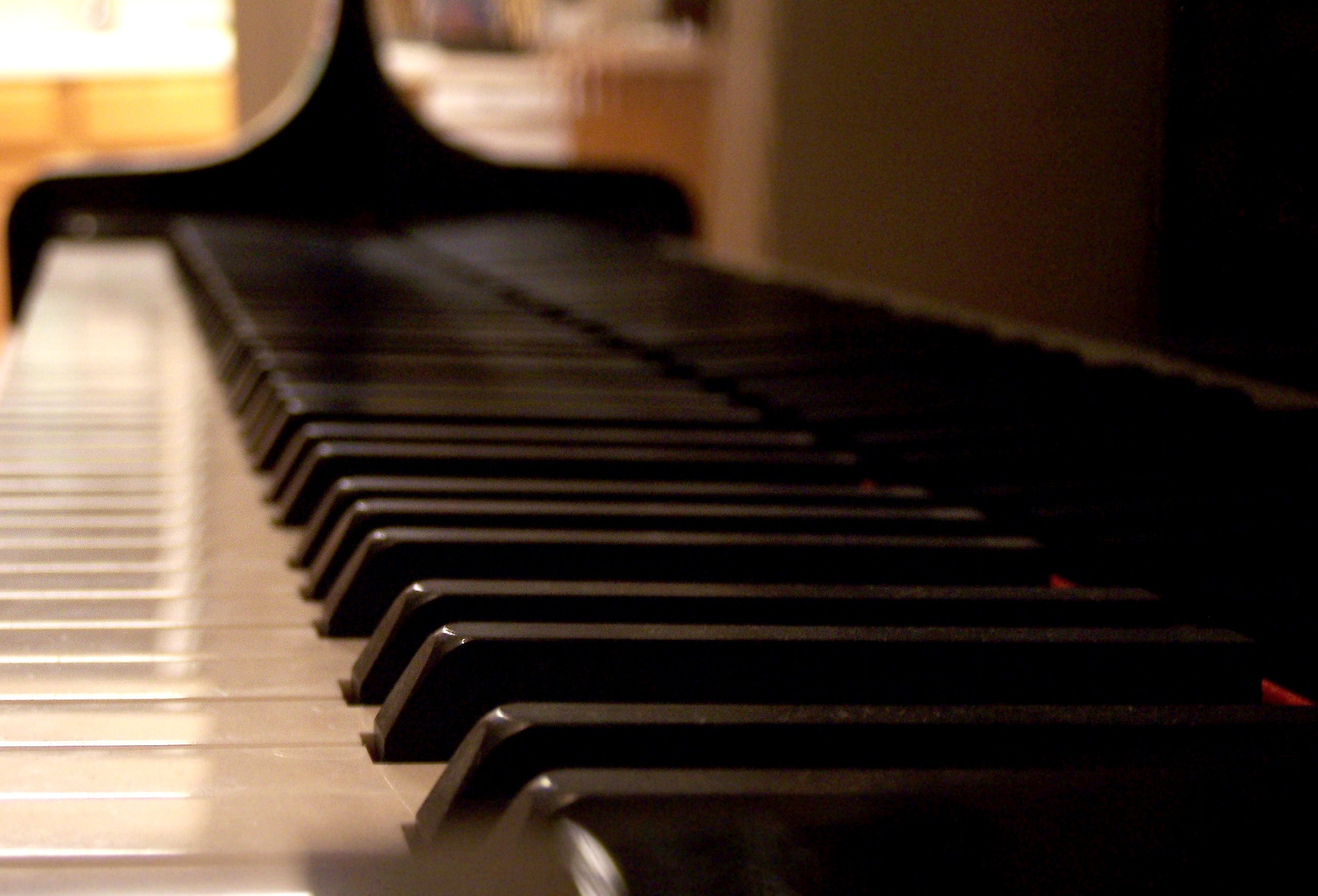
Doesn't Everyone Love Piano?

My older daughter is starting piano lessons this Sunday, and I'm so excited. She's always loved music, and I think she'll have a wonderful time expanding her piano knowledge from Hot Cross Buns. Part of the reason I'm so excited, though, is that I'm acutely aware of how important piano has been in my life. Music and theater shaped my childhood in a way nothing else (save my parents, of course) did, and I still can't imagine living in a home without a piano. When I first moved to DC after college, my fingers got itchy and I rented a piano to have in my little basement apartment. So it's with all of that history that I look forward to my daughter's lessons. You can imagine, then, that even as I hold this excitement I am also trying very hard to hold non-attachment to outcome, to hold the willingness to see how my daughter's interaction with piano unfolds...and to remember that her experience may be different than mine. She might hate the piano! She might be terrible at it! She might turn into a fabulous lacross player instead! My job, as a parent, is to allow that to happen and to keep my own self out if it as much as possible. And really, isn't that our job as people? It's so easy to fall into the trap of thinking that what's right for you is right for someone you love, or for the person down the street, or for anyone else you might come across. When what we should be doing is opening our hearts to whatever is right for that person, whether or not it feels right to us. I don't mean moral relativism here--I'm not talking about right ethical choices--I mean good life relativism, or something like that. I mean respecting the uniqueness of an individual, even when it challenges our own notions of what a life or a love "ought" to look like. I can't lie. I still really, really hope my daughter loves the piano. But part of my own spiritual practice will be listening to her more than to me.

Sunday, August 5, 2012

Book Review: "Death With Interruptions" by Jose Saramago

This is one of my favorite kinds of books--a novel with deep philosophical ideas within it. It's written, though, in a style I haven't encountered before: almost stream of consciousness, but like a report, telling the reader what has happened. And what has happened is that death stopped coming to one particular country. No one dies, but no one really gets well either; they just teeter on the brink of death, unable to make that final passage. The results of life without death are funny, sad, practically challenging, and ultimately tied up in how society handles almost anything. There's plenty of commentary about governmental control, organized crime, and the Church (there's just one, monolithic church in the book's world). But for me the most interesting thing to consider in this novel is the idea of immortality. Actually, the book was recommended to me by a WES member after I gave a platform about (im)mortality almost a year ago. "Death With Interruptions" certainly confirmed my belief that immortality isn't all it's cracked up to be. Toward the end of the novel, too, there is a beautiful look at love and how death and loss interact with love. I recommend it, both for the themes it explores and for the artistry found in the unique voice the author uses.

Thursday, August 2, 2012

Book Review: "Religion for Atheists" Alain de Botton

This book is one that's gotten a fair amount of buzz in humanist circles, and I enjoyed Alain de Botton's TED talk on the same subject...so I gave the book a go. For the most part, I like it. It's an easy read, very accessible, and de Botton approaches the topic with some humor. As usual with books written from an atheist viewpoint, there were some references to traditional religion that I found derogatory (mostly about services being boring)--I just think there's no place for that. And again as usual, I thought de Botton's formulation of God was very narrow: if I defined God as he does, I'd consider myself an atheist too, but I don't define God that way, and atheist isn't a label that's ever fit for me. But the "new thing" about de Botton's book is refreshing among atheist books, which is the idea that even when we don't believe in God we might not want to throw out religion all together--that there's something powerful, positive, and necessary about religious experience. Of course this is a bit of a duh for me. I've spent my whole life as part of and serving religious communities that welcome people with all kinds of belief, including what they might call no belief (I always think we believe in something, but that's another topic). So I do get a little frustrated when authors say, essentially, "Gosh! Someone should invent a religion for people who don't believe what traditional religions believe!" Um, right. Someone did. A few, actually. Author, meet Unitarian Universalism, Ethical Culture, Humanistic Judaism, and many sects of Buddhism. What I thought was more interesting about de Botton's book was exactly what he thought atheists might be missing from religion. The usual suspects of celebration, care during times of grief, mindfulness were all there. But de Botton also highlighted the need for a human understanding of our own failure, acknowledging the sense of desperation we sometimes feel, finding a place where we can really admit our deep sorrows and our darkness. These are aspects of the religious life that I think progressive religious traditions--or at least Unitarian Universalism and Ethical Culture, the two with which I'm most familiar--have sometimes neglected in our eagerness to honor the worth and potential goodness in each person. Our bent toward optimism about the human spirit can blind us to the very real experiences of sorrow, sin, and despair. That's my takeaway. Have you read the book? I'd love to hear how it resonated, or didn't, for you!